A Rainy Arrival: When a Ramp Saved the Day
It was a blustery April morning at Atlanta Hartsfield-Jackson International Airport. My flight from Miami had been uneventful—my electric Quickie Q7 hummed comfortably as I rolled off the plane—but the real challenge awaited me outside Gate B14. A maintenance crew had blocked the usual ramp access to the curbside drop-off, leaving a six-inch lip between the sidewalk and the terminal entrance.
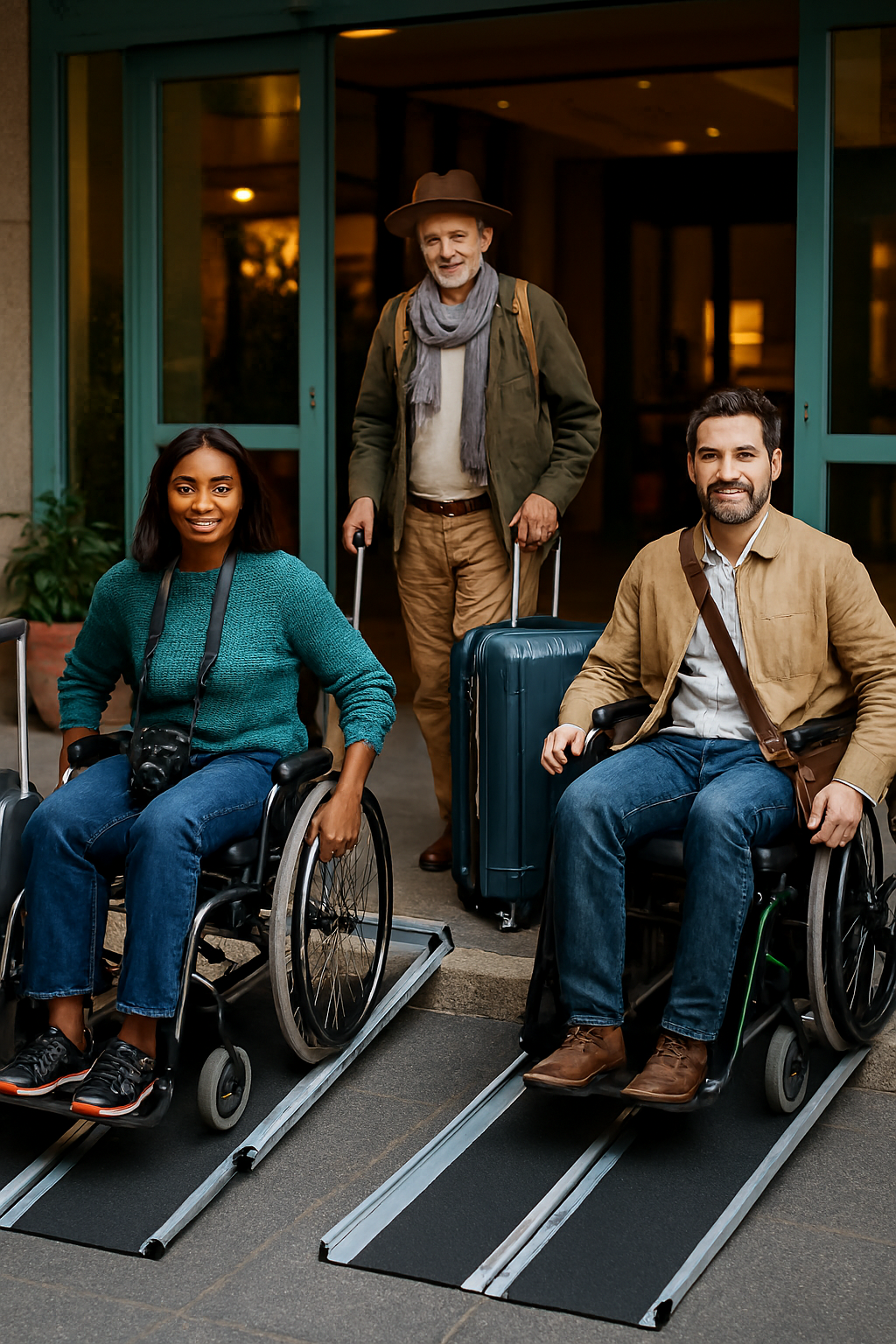 Portable Ramps For Travel
Normally, I would have been stranded, relying on staff to lift me over the curb. But this time, I had packed my portable Aluminium Travel Ramp, folded neatly in my carry-on. Within seconds, I deployed the ramp, rolled over effortlessly, and even managed a small victory grin at the onlookers.
This small, seemingly mundane piece of equipment had transformed a potentially frustrating start into a smooth, independent experience. It's moments like these that remind me why portable ramps are essential travel companions for wheelchair users.
The Evolution of Portable Ramps
Portable ramps have come a long way from the heavy, industrial planks of the past. Today, they're lightweight, foldable, and strong enough to support electric wheelchairs while remaining compact for travel. I remember my first ramp—a 25-pound steel contraption that needed two people to lift. Fast forward to my current 21-pound telescopic aluminum ramp from EZ-Access, which I can carry alone or store in the trunk of a rental car.
When selecting a ramp, travelers must consider:
- Weight and portability: Can it be lifted or folded easily? Airline carry-on limitations may apply.
- Length and slope: Following ADA guidance, a slope of 1:12 is ideal (ADA.gov). Shorter ramps require steeper inclines, which can be challenging for manual wheelchair users.
- Load capacity: Check that the ramp supports the combined weight of your wheelchair and any occupant—my Q7 with my weight totals roughly 380 lbs, so I look for ramps rated above 400 lbs.
Case Study: Navigating Hotels in Europe
During a May 2024 trip to Lisbon, Portugal, I encountered a charming boutique hotel on the Alfama hillside. The lobby was narrow, with a small step at the entrance. The staff kindly offered assistance, but I wanted independence. My portable ramp made it possible: unfolded in under 60 seconds, I rolled over the threshold without waiting.
Inside, another challenge awaited—the bathroom had a two-inch threshold. Here, a mini folding ramp (I carry two sizes: one 4 ft and one 2 ft) bridged the gap, allowing full use of the facilities without assistance.
Lesson learned: having multiple ramp sizes can be lifesaving, especially in older cities with historic architecture where steps and thresholds abound.
Types of Portable Ramps for Travel
1. Folding Ramps
- Description: Typically made of aluminum or composite materials, fold in half or thirds for storage.
- Use Case: Ideal for hotel entrances, short stairs, or curbs.
- Example: EZ-Access Multi-Fold, 4 ft, 400 lb capacity.
2. Telescoping Ramps
- Description: Slide out to desired length, often lightweight and compact.
- Use Case: Airports, rental cars, and temporary obstacles.
- Example: Prairie View Industries Telescopic Ramp, 6 ft, foldable to 2 ft for easy transport.
3. Portable Threshold Ramps
- Description: Small ramps for indoor or minor exterior steps.
- Use Case: Doorways, bathrooms, or small raised areas.
- Example: Prairie View 1 in Threshold Ramp, 24 in length, ideal for hotel rooms or shops.
Practical Tips for Travel
1. Pre-Trip Reconnaissance
Before leaving, I always:
- Measure hotel room thresholds and bathroom entryways.
- Confirm curb heights and drop-off zones at airports.
- Research local accessibility policies (Airline-specific assistance details: Delta Accessibility | American Airlines Accessibility).
This foreknowledge allows me to choose the right ramp length and avoid unpleasant surprises.
2. Packing for Portability
- Multiple sizes: One long ramp for curbs, one mini ramp for thresholds.
- Carry bag: Many ramps come with padded bags—reduces wear and makes airline handling easier.
- Weight balance: Airlines typically allow checked items up to 50 lbs, but I prefer keeping my ramps as carry-on for immediate use.
3. Deployment and Safety
- Ensure ramp surface is clean and free of obstacles.
- Position ramp securely; some ramps have non-slip rubber feet.
- For manual wheelchairs, check slope before attempting—steeper inclines require more effort and may need assistance.
Real-World Anecdote: The Café Challenge
I was in Montreal in July 2023, eager for a café breakfast in Old Port. The charming establishment had a small step at the entrance—one of those places where "cozy charm" clashes with accessibility. My folding ramp came to the rescue. I deployed it in a narrow alley without disturbing other patrons, rolled in, and enjoyed my croissant while watching the city wake up.
Lesson: portable ramps are not just for emergencies—they create opportunities to explore, dine, and engage independently.
Beyond the Basics: Choosing a Ramp Brand
I've tested dozens of portable ramps over the years, focusing on reliability, weight, and ease of setup. Some personal favorites include:
- EZ-Access Multi-Fold: My go-to for hotel and curbside use.
- Prairie View Industries Telescopic: Compact, lightweight, and sturdy; excellent for airports and rental cars.
- Roll-A-Ramp: Rollable design ideal for small, uneven thresholds.
Each brand has its nuances—some have rubberized, non-slip surfaces; others fold in seconds. Personal testing is key: a ramp that works perfectly in theory may be awkward to deploy with a backpack or carry-on bag.
Airports, Airlines, and Portable Ramps
Airports present unique accessibility challenges—curbs, boarding bridges, and shuttle buses often require ramps. Here's what I've learned:
- Pre-boarding coordination: Notify airline staff in advance if you'll use a personal ramp.
- Curbs and drop-off points: Not all terminals provide level access. My telescopic ramp fits in the overhead bin for emergencies.
- Security screening: TSA allows folding ramps as assistive devices—always inform the agent in advance.
In Atlanta, using a telescopic ramp for a rental car transfer allowed me to avoid waiting for airport wheelchair staff, saving nearly 20 minutes. Small moments like these add up over a trip.
Common Pitfalls and How to Avoid Them
- Assuming all hotels are threshold-friendly: Even "accessible" hotels may have 1–2 in lips at bathroom entrances. Always measure or request photos.
- Underestimating slope: Short ramps over high curbs create steep angles. Know your wheelchair's capabilities.
- Forgetting backup gear: I always pack a mini ramp even if I have a long one. Redundancy ensures independence.
Quotes from Fellow Travelers
"I never leave home without my portable ramp—it turns inaccessible into accessible within minutes." — L., Paris
"A ramp in my trunk is freedom in a bag. It's transformed my solo trips." — R., London
Lessons Learned on the Road
- Multiple ramp sizes increase versatility.
- Pre-trip communication avoids surprises.
- Personal testing beats assumptions: Try deploying the ramp in your hotel room or garage to perfect technique.
- Portability matters as much as strength: Lightweight aluminum often beats heavy steel.
Reflection: Ramps as Freedom
Portable ramps are more than tools—they are instruments of independence. They allow travelers with mobility needs to embrace the spontaneity of travel without waiting for staff or relying on others. Every rolled threshold, every curb conquered, and every café entered solo is a reminder: accessibility is freedom, not a favor.
When packed correctly, deployed confidently, and combined with thoughtful planning, portable ramps transform the way wheelchair users experience the world. For me, they are as essential as my travel passport or plane ticket.
About Harper Shore
Harper Shore has spent over a decade exploring cities, beaches, and remote destinations using mobility aids. She combines firsthand testing of travel equipment with storytelling, providing actionable guidance, real-world insights, and inspiring travelers with mobility needs to travel independently and confidently.