A practical guide for wheelchair users, sharing real-world tips and experiences for booking and enjoying accessible hotel rooms safely and independently.
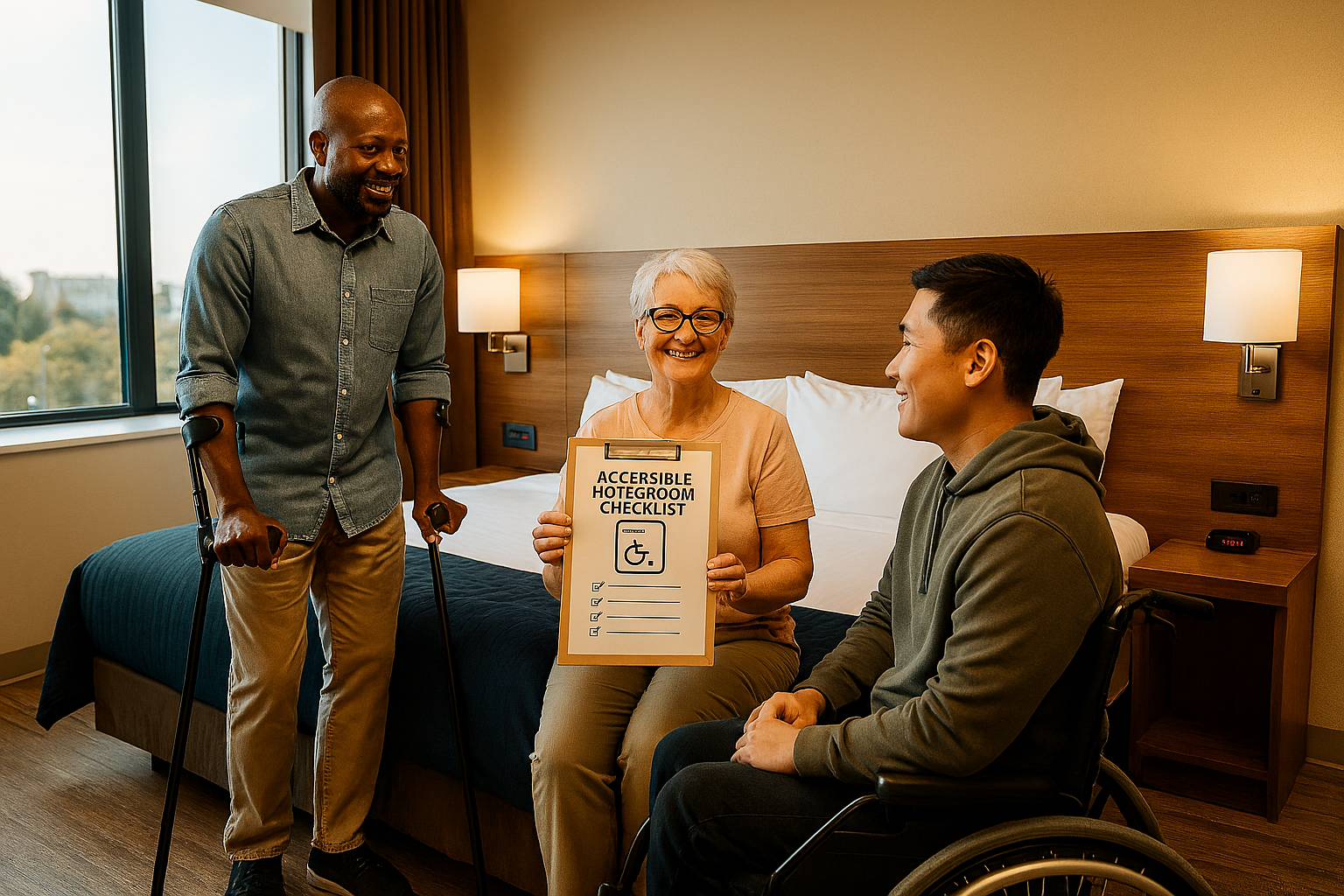 Accessible Hotel Room Checklist
Introduction
I will never forget the moment I arrived at a hotel in Atlanta for a conference in October 2019. I had just taken a three-hour flight from Miami and was eager to stretch my legs and drop my bags. As I entered the room, I noticed the doorway barely fit my wheelchair. The bathroom had no grab bars, a high shower curb, and the toilet placement made transfers risky. That experience changed every trip I took afterwards.
An accessible hotel room is more than a compliance checkbox; it's about independence, safety, and comfort. Details like door widths, furniture layouts, lighting, and closet heights can determine whether your stay is smooth or stressful.
Why an Accessible Hotel Room Checklist Matters
Hotels often advertise "accessible" rooms, but labels can be misleading. Even rooms that meet ADA standards may have obstacles that make safe use difficult:
- Doorways as narrow as 32 inches blocked by furniture or luggage racks.
- Grab bars poorly positioned for actual body strength.
- Roll-in showers with tiles but insufficient turning space.
Using a checklist ensures all aspects are verified: before booking, during check-in, and throughout your stay.
Planning Ahead: Research Before Booking
1. Communicate Directly with the Hotel
Call or email to confirm doorway widths, bed heights, shower types, and furniture arrangements.
Example: When booking a Marriott in San Diego, the accessibility coordinator provided detailed measurements and moved a chair to widen turning space. I kept screenshots to prevent miscommunication at check-in.
Resource: ADA.gov – Lodging Accessibility
2. Review Photos Critically
Hotel photos can exaggerate accessibility. Look for clear space around beds, bathroom layout, signage, and elevator proximity.
Example: In Boston, a boutique hotel's photos hid a narrow hall leading to the bathroom. Requesting a different layout saved stress and ensured smooth access.
The Essential Accessible Hotel Room Features
1. Doorways and Entry
- Width: Minimum 32 inches; ideally 36 inches.
- Thresholds: Low or beveled; use ramps if raised.
- Handles: Lever-style preferred over knobs.
Anecdote: At a Tokyo hotel, a folding ramp enabled independent entry despite a raised threshold.
2. Furniture Layout
- Turning Radius: At least 5 feet.
- Bed Clearance: Under-bed space for foot clearance or storage.
- Removable Furniture: Chairs, tables, ottomans should be movable to clear paths.
Tip: Ask staff to rearrange furniture when needed.
3. Bed Configuration
- Height: 18–22 inches for safe transfers.
- Firmness: Avoid beds that are too soft or too firm.
- Bedding: Lightweight duvets and accessible sheets simplify transfers.
4. Bathroom Accessibility
- Roll-in showers with slip-resistant floors and turning space.
- Grab bars near toilet and shower, supporting full body weight.
- Fold-down or portable shower seats.
- Sink height: 30–34 inches with clearance underneath.
- Toilet height: 17–19 inches.
Anecdote: A shower mat in Miami prevented water pooling hazards.
Resource: ADA Standards for Accessible Design – Hotel Bathrooms
5. Lighting and Controls
- Light switches 36–48 inches from floor.
- Bedside lamps and outlets within arm's reach.
- Window shades manual or automated, accessible from seated position.
Tip: Carry a clip-on LED light for dim hotel lighting.
6. Closet and Storage Accessibility
- Rod height: 40–48 inches (use a reacher if needed).
- Lower shelves for daily items.
- Lockable drawers for valuables and medications.
7. Emergency and Safety Features
- Visual and auditory alarms.
- Accessible evacuation routes and clear signage.
- Non-slip flooring throughout room and bathroom.
Navigating Real-World Challenges
- Tight corners: use chairs or cushions to create space.
- Shower curbs: portable ramps or wedge mats.
- Limited staff: pack reachers, shower chairs, and gel cushions.
- Unexpected layouts: walk through room on arrival to plan adjustments.
Personal Tips for Seniors and Wheelchair Users
- Check-in early to allow staff to make adjustments.
- Document needs: measurements, photos, emails.
- Pack essentials: cushions, ramps, portable shower seats, gloves.
- Flexibility: be ready to adapt if features differ from photos.
- Advocate politely for necessary adjustments.
Case Studies: Accessible Hotel Rooms in Practice
Atlanta, USA — Marriott Marquis
- Room 215 — Roll-in shower, 36-inch doors, lowered wardrobe.
- Staff moved side table to create 5-foot turning radius.
- Outcome: smooth access to lounge and pool.
Barcelona, Spain — Hotel Praktik Rambla
- Room 310 — Lowered bed, fold-down shower seat, grab bars.
- Challenge: narrow hallway; staff used ramp and assisted with luggage.
- Outcome: safe, independent shower and transfers.
Tokyo, Japan — Park Hotel
- Room 502 — Spacious layout, adjustable bed, visual alarms.
- Slight threshold solved with portable ramp; LED bedside lamp for nighttime.
- Outcome: full participation in hotel amenities.
Reflection: Why Attention to Detail Matters
Accessible rooms are more than compliance; they provide dignity, independence, and peace of mind. Thoughtful rooms empower travelers with mobility challenges to enjoy destinations confidently.
Final Thoughts and Actionable Next Steps
- Research: verify measurements and layouts beyond "accessible" labels.
- Communicate: confirm needs with staff prior to arrival.
- Pack smart: mobility aids, cushions, and portable solutions.
- Inspect upon arrival: identify hazards, adjust furniture, test shower access.
- Advocate: politely request changes when needed.
About the Author
Harper Shore has over ten years of experience traveling worldwide using a wheelchair, sharing practical tips, travel journalism, and guidance for people with mobility challenges.